 how-to
How to Vet Car Carriers for Hire: 2026 Guide
Table of Contents
- Why Vetting Car Carriers Matters Before You Hire
- How to Vet Auto Transport Carriers: The Essential Checks
- Verify Auto Transport Carrier Insurance Before Booking
- Questions to Ask an Auto Transport Broker or Carrier
- How to Avoid Bait and Switch Auto Shipping Tactics
- Broker vs. Motor Carrier: Understanding Who Transports Your Vehicle
- Red Flags and Scams to Avoid When Hiring Car Carriers
- Preparing Your Vehicle and Documenting Condition
- Frequently Asked Questions
Last Updated: October 18, 2026
Why Vetting Car Carriers Matters Before You Hire
Shipping a vehicle across state lines isn't something you do every day. When you do, the stakes are high. Your car sits in a stranger's hands for days or weeks. One careless carrier among poorly vetted vet car carriers can leave you with thousands in damage, missed deadlines, or worse, a vehicle that never arrives.
This is where vetting car carriers becomes non-negotiable. Hidden fees appear. Carriers disappear mid-shipment. Insurance claims get denied because the carrier wasn't actually bonded. The damage isn't just financial, it's the stress of not knowing where your vehicle is or whether it will arrive intact.
The good news: you don't need to be an expert to vet a carrier properly. A few critical checks separate the professionals from the fly-by-night operators. This guide walks you through exactly what to look for, what questions to ask, and the red flags that should send you running.
How to Vet Auto Transport Carriers: The Essential Checks
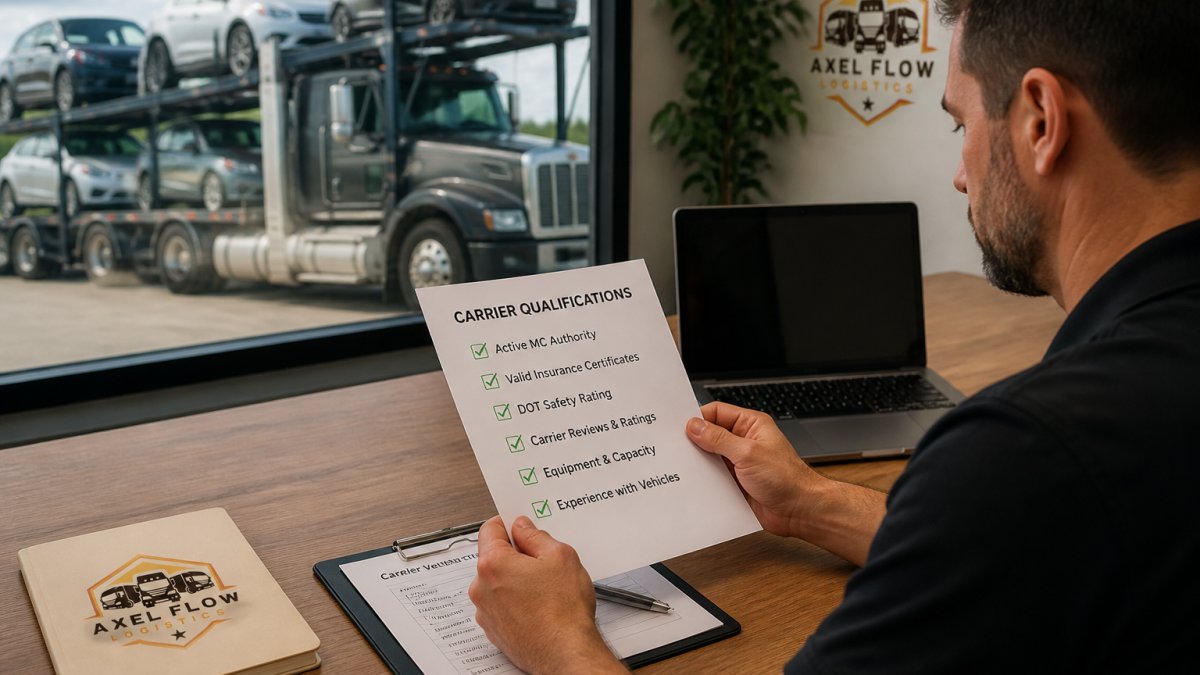
Vetting an auto transport carrier comes down to three core verifications: registration, bonding, and insurance. Miss any of these, and you're gambling with your vehicle. Each check takes minutes but protects you completely.

Verify FMCSA Registration and Safety Records
Before you call a carrier, verify they're registered with the Federal Motor Carrier Safety Administration. This is your baseline check. If a carrier isn't FMCSA-registered, they're operating illegally. Period.
Go to the FMCSA's Safety and Fitness Electronic Records (SAFER) database at FMCSA Safety and Fitness Electronic Records system. Search by company name or USDOT number. You'll see their registration status, safety inspection history, and any violations on record.
What to look for: Active registration status, a clean or minimal violation history, and a USDOT number that matches what they gave you. Red flag: if you can't find them in SAFER, they're not legitimate. Also check how long they've been operating. New carriers sometimes cut corners.
Confirm Bonding and Licensing Status
A bonded carrier has posted a financial guarantee. If something goes wrong, that bond protects you. Licensing proves they've met state requirements. Together, these show a carrier takes compliance seriously.
Ask the carrier directly for their MC (Motor Carrier) number and bond certificate. Verify the MC number matches their FMCSA registration. Call your state's Department of Transportation to confirm their license is current and in good standing. Many carriers will email you proof without hesitation, legitimate ones expect this question.
A carrier that refuses to provide bonding proof or gets defensive about licensing? Move on. This is the easiest red flag to spot.
Review Insurance Coverage and Liability Limits
This is where most shippers get blindsided. A carrier can be FMCSA-registered and bonded but still carry inadequate insurance. You need to know exactly what's covered if your vehicle gets damaged.
Ask for their Certificate of Insurance. Verify it lists auto transport liability coverage. The certificate should also show the insurance company name and policy number, call the insurance company directly to confirm the policy is active.
Verify Auto Transport Carrier Insurance Before Booking
Insurance verification deserves its own deep dive because it's where most disputes happen. A carrier might have insurance on paper but not the coverage you think you're getting.
When you request the Certificate of Insurance, look for these specifics: the policy effective date (it must cover your shipment dates), the coverage limits per vehicle and per occurrence, and whether it includes general liability. Some policies exclude certain types of damage or have exclusions for high-value vehicles.
Call the insurance company listed on the certificate. Confirm the policy is active and ask what's actually covered. Ask specifically about damage from weather, road debris, accidents, and loading/unloading errors. Some policies won't cover damage that occurs during loading, you need to know this upfront.
For door-to-door vehicle delivery, ask whether the insurance covers your vehicle while it's being transported to the carrier's lot, while it's waiting for pickup, and during final delivery.
| Coverage Type | What It Covers | What to Verify |
|---|---|---|
| Liability | Carrier's responsibility for damage | Minimum $100K per vehicle |
| General Liability | Third-party injury/property damage | Should be included |
| Loading/Unloading | Damage during handling | Often excluded, ask explicitly |
| In-Transit | Damage while vehicle is on carrier | Must be included for your dates |
| Storage | Damage while vehicle waits | Check exclusions and time limits |
Questions to Ask an Auto Transport Broker or Carrier
The conversation you have with a carrier or broker reveals a lot. Professional operators answer questions directly. Evasive carriers are hiding something.
Ask these questions and listen to how they answer, not just what they answer:
- "Can you provide your USDOT number and MC number right now?" (Professionals have these memorized.)
- "What's your average on-time delivery rate?" (Legitimate carriers track this.)
- "What happens if you're late? Do I get a discount or refund?" (Evasive answers are a red flag.)
- "Can you send me proof of insurance and bonding before I commit?" (This should be routine.)
- "What's included in your quote, and what costs extra?" (Hidden fees appear here.)
- "How do I track my vehicle during transport?" (Real-time tracking is standard now.)
- "What's your cancellation policy?" (Get this in writing.)
A broker should also explain their role clearly. They connect you with carriers but don't own the trucks. That matters because if something goes wrong, you need to know who's responsible. A good broker stays involved and handles disputes. A bad one disappears after you pay.
How to Avoid Bait and Switch Auto Shipping Tactics
Bait and switch in auto transport works like this: You get a quote for $800. You book. The carrier calls back with "new information", fuel surcharge, route adjustment, weight miscalculation, and suddenly it's $950. You're locked in. Canceling costs a penalty. You pay.
Here's how to protect yourself.
Get your quote in writing with every cost itemized. Don't accept verbal quotes. The written quote should specify the pickup date, delivery date, vehicle condition, pickup location, delivery location, and total price.
Ask whether the quote is binding or subject to change. Binding quotes can't increase unless you request additional services. Non-binding quotes can fluctuate, which gives carriers wiggle room. For peace of mind, always negotiate for a binding quote or a maximum price cap.
Before you pay anything, confirm the pickup date in writing. Carriers sometimes claim they "couldn't find a driver" or "had a breakdown" and push your pickup back weeks. This ties up your vehicle and disrupts your timeline.
Broker vs. Motor Carrier: Understanding Who Transports Your Vehicle
Here's confusion that costs people money: A broker is not a motor carrier. Understanding the difference protects you when something goes wrong.
A broker is a middleman. They take your shipment, find a motor carrier to handle it, and coordinate logistics. Brokers don't own trucks. They're licensed by the FMCSA but don't physically transport vehicles. Axel Flow Logistics is a broker.
A motor carrier owns and operates the trucks. They pick up your vehicle, transport it, and deliver it. Motor carriers are directly liable for your vehicle while it's in their possession.
This matters because if something goes wrong, you need to know who to hold accountable. If a broker's carrier damages your vehicle, the broker should help you file a claim with the carrier's insurance.
When you're evaluating who to hire, ask directly: "Are you a broker or a motor carrier?" If they're a broker, ask which carriers they use and whether you can vet those carriers directly.
Red Flags and Scams to Avoid When Hiring Car Carriers
Some warning signs are obvious when evaluating vet car carriers. Others are subtle. Learning to spot both saves you from costly mistakes.
Obvious red flags:
- No USDOT number or can't find them in SAFER database
- Refuses to provide proof of insurance or bonding
- Won't give you a written quote
- Demands full payment upfront
- No physical address, only a P.O. box or cell phone number
- Offers a price dramatically lower than competitors
Subtle red flags:
- Won't commit to a specific pickup date
- Vague about what "door-to-door" actually means (does it include your driveway or just the street?)
- Adds fees after you've agreed to the quote
- Can't explain their insurance coverage clearly
- Defensive when you ask for references
- Promises guaranteed delivery times
Common scams:
- Fake insurance certificates (verify directly with the insurance company by phone)
- Misrepresenting MC or USDOT numbers (check SAFER yourself, don't rely on their word)
- Holding your vehicle hostage for extra fees (get your contract in writing with a locked price)
- Disappearing mid-shipment (use a broker or carrier with real-time tracking)
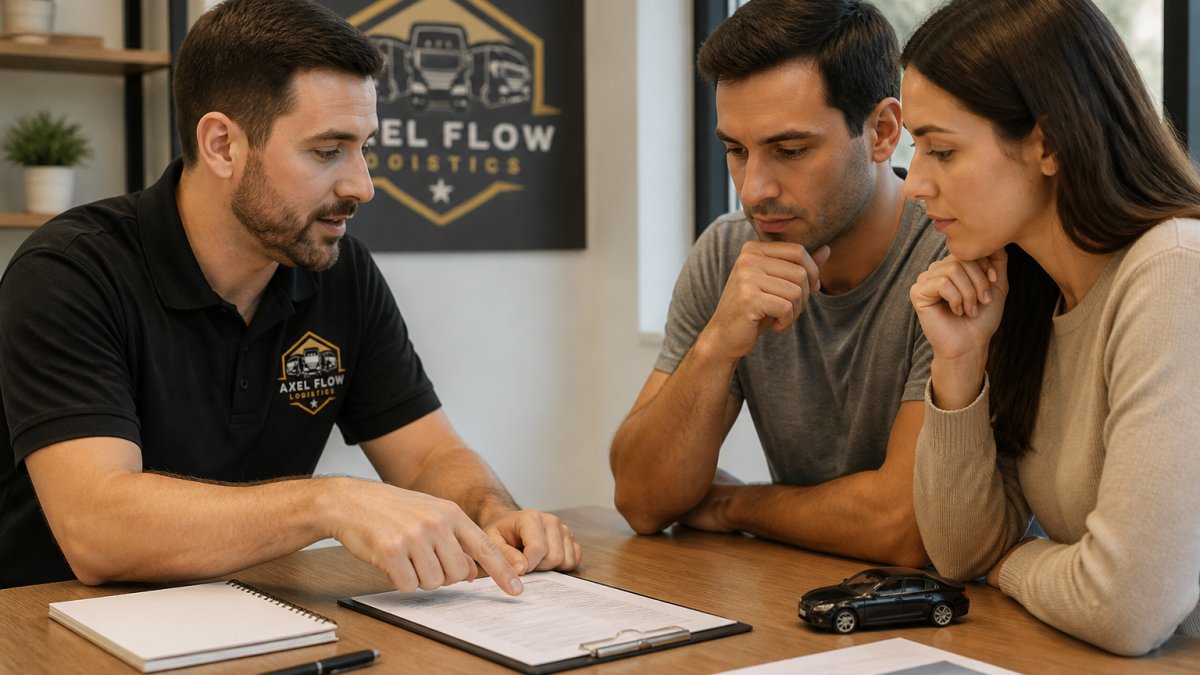
The safest approach: use a broker like Axel Flow Logistics who vets carriers before they ever touch your vehicle. We verify FMCSA registration, insurance, and safety records for every carrier we work with. Whether you need Open Auto Transport for standard shipments or Door-to-Door Vehicle Shipping for added convenience, you get transparency, real-time tracking, and a partner who stays involved if anything goes wrong. Our bilingual support and advanced routing strategies mean fewer delays and better communication throughout your shipment.
Preparing Your Vehicle and Documenting Condition
Your vetting work doesn't end when you book a carrier.
Before pickup, wash your vehicle and take photos from multiple angles. Get clear shots of any existing dents, scratches, or damage.
Remove personal items from the vehicle. Carriers typically won't accept liability for items left inside. Remove or secure any loose parts like mirrors or antennas.
When the carrier arrives for pickup, walk through the vehicle with the driver. Point out any existing damage.
When your vehicle is delivered, inspect it immediately with the driver present. Check for new damage, missing items, or mechanical issues. Take photos if you find anything wrong.
If you find damage after the driver leaves, document it with photos and written descriptions immediately. Contact the carrier and broker within 24 hours.
Vetting a car carrier takes time, but it's time that protects your vehicle and your wallet. Start with FMCSA registration and insurance verification.
When you're ready to book, Axel Flow Logistics handles the vetting for you. Get a free quote today and ship with confidence, knowing your vehicle is protected by a broker who takes vetting seriously. Learn more about FMCSA compliance standards to understand the regulations that govern safe transport, and check FTC guidance on auto transport contracts for your consumer rights when booking carrier services.
Frequently Asked Questions
How do I verify an auto transport carrier is legitimate?
Check the carrier's FMCSA registration on the Federal Motor Carrier Safety Administration website using their MC number. Confirm active status, review safety ratings, and verify current insurance coverage. Ask for proof of bonding and licensing. Legitimate carriers are registered, insured, and bonded; if a carrier cannot provide these credentials, they are not operating legally.
What questions should I ask an auto transport broker?
Ask about carrier selection criteria, how they vet carriers, what insurance covers your vehicle, pickup and delivery timelines, whether pricing is guaranteed or subject to change, how they handle delays, and what documentation you'll receive. Request the specific carrier name and contact information, not just a broker promise. Ask about their claims process and how they resolve disputes.
How can I avoid bait-and-switch pricing when shipping a car?
Get quotes in writing with all terms specified: pickup location, delivery location, vehicle specifications, transport type (open or enclosed), and final price. Confirm whether the quote is binding or subject to change. Ask about potential extra fees (fuel surcharges, tolls, holiday premiums). Request the carrier's contact details to verify the quote independently. Never pay in full upfront; use secure payment methods and hold funds until delivery.
What insurance should an auto transport carrier have?
Carriers must carry cargo liability insurance and general liability insurance. Request proof of current insurance certificates. For high-value vehicles, confirm the carrier's insurance limits exceed your vehicle's value. Ask whether your personal auto insurance or the carrier's policy covers damage during transport. Understand deductibles and what the insurance actually covers before booking.