 ultimate-guide
Shipping One Car Across State Lines: Complete Guide
Table of Contents
- How Car Shipping Between States Works
- How Much Does It Cost to Ship a Car
- How Long Does Car Shipping Take
- Open vs. Enclosed Car Transport
- Documents Needed to Ship a Car
- Preparing Your Vehicle for Transport
- Insurance, Claims, and Scam Prevention
- Frequently Asked Questions
Last Updated: October 11, 2026
How Car Shipping Between States Works
Shipping one car across state lines involves more than just finding a truck and handing over your keys. The process requires understanding the roles of different players in the transportation network, verifying credentials, and knowing what to expect at each stage.
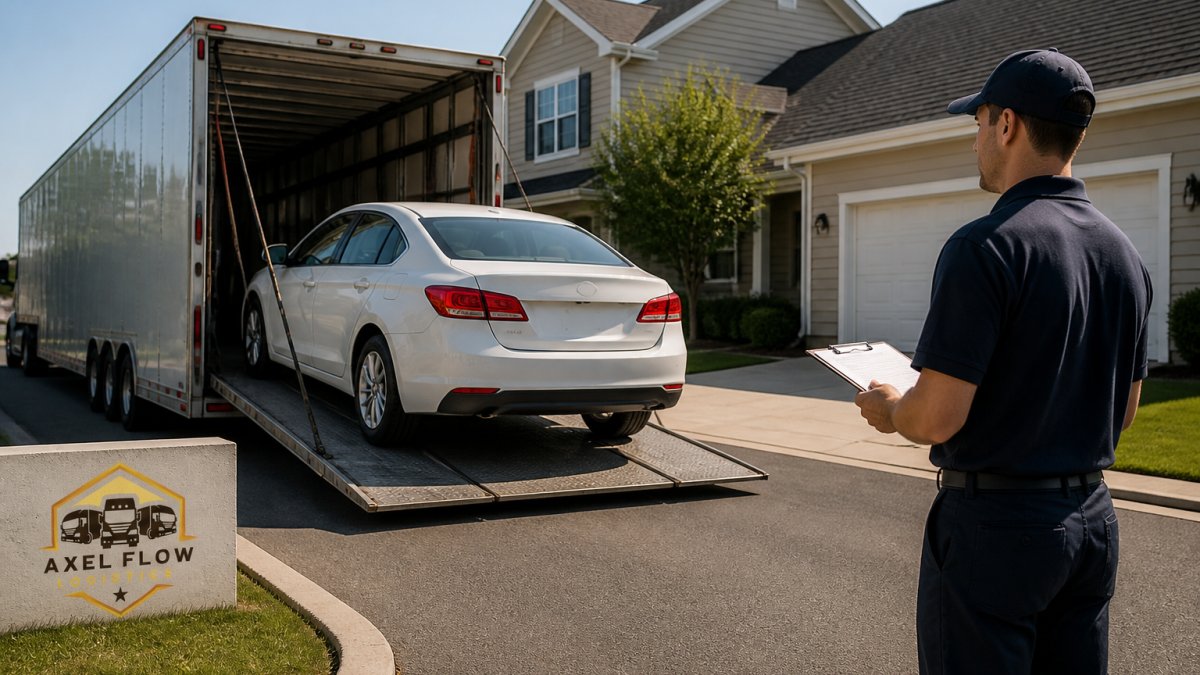
Shipping one car across state lines involves a regulated network of carriers, brokers, and logistics coordinators. Understanding each role protects you from delays, miscommunication, and unreliable service.
The Broker vs. Carrier Role
A carrier owns and operates the truck. A broker is a licensed intermediary who connects shippers with carriers, manages logistics, negotiates rates, and handles paperwork.
This distinction matters for accountability. When you book through a broker like Axel Flow Logistics, you get carrier vetting, compliance checks, and a single point of contact.
Many skip the broker to save money, but brokers often secure better rates through high-volume relationships with carriers and shield you from unreliable operators.
Why Verification Matters
Before pickup, verify the carrier holds current FMCSA registration and adequate insurance. A valid USDOT number and MC (Motor Carrier) number are legal requirements, both checkable on the FMCSA website.
Red flags include carriers who can't provide proof of insurance, refuse written quotes, or pressure upfront payment. Legitimate carriers maintain transparent documentation because violations result in fines and loss of operating authority.
At Axel Flow Logistics, every carrier in our network undergoes rigorous vetting based on safety records, insurance standards, and compliance history. This means you're protected by our verification process before you ever sign a contract.
How Much Does It Cost to Ship a Car
The cost depends on distance (primary factor), fuel prices, carrier availability, vehicle size, and seasonal demand.
What Factors Affect the Shipping Price
Distance and route. Longer routes cost less per mile due to load consolidation and fuel efficiency.
Vehicle size and weight. Full-size SUVs and trucks cost more than compact sedans due to space and weight.
Operable vs. inoperable vehicles. Operable vehicles cost less to ship.
Open vs. enclosed transport. Open transport exposes your vehicle to weather and road debris but costs less.
Seasonal demand. Summer months see higher shipping volumes, which can increase costs.
Fuel prices and market conditions. Carrier rates fluctuate with diesel fuel prices. When fuel costs spike, shipping prices rise accordingly.
Getting a Quote and Booking Transport
To get a quote, provide pickup and delivery locations, vehicle details (make, model, year, condition), and timeline. Reputable brokers generate quotes using real-time market data.
Don't choose based on price alone. Verify the quote includes pickup, transport, and delivery, and ask about price adjustments for delays or fuel spikes.
At Axel Flow Logistics, we provide transparent quotes. Our pricing reflects current market conditions and carrier availability on your specific route. If your shipment timeline changes or fuel prices shift significantly, we communicate any adjustments upfront rather than surprising you at pickup.
How Long Does Car Shipping Take
Most shipments take 5 to 10 business days.
Carriers average 400 to 600 miles per day, accounting for fuel stops, driver rest requirements, and route efficiency.
Transit Times and Delivery Scheduling
You'll receive a pickup window (usually 2 to 5 days) and estimated delivery date. The carrier contacts you 24 hours before pickup. Delivery follows a similar pattern, a window, not a guaranteed hour.
Delays happen due to weather, mechanical issues, traffic, or scheduling conflicts. Reputable brokers communicate delays immediately. Silence or unexplained missed windows signal poor service.
For time-sensitive relocations or vehicle sales, discuss expedited shipping options when you book.
Open vs. Enclosed Car Transport
Open transport places your vehicle on an open-air carrier alongside other cars. The truck has no roof or sides, exposing your vehicle to weather, dust, and road debris. Enclosed transport uses a covered trailer that protects your car from all external elements.
Open transport costs less because carriers transport multiple vehicles simultaneously. It's ideal for everyday vehicles.
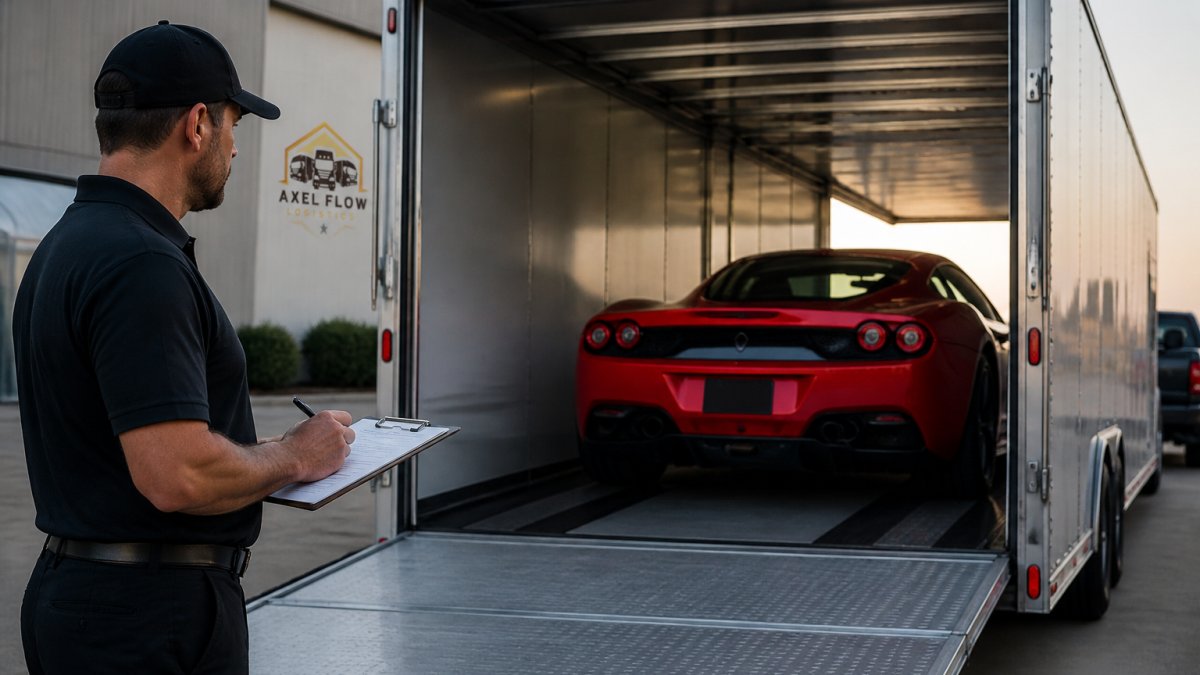
Enclosed transport makes sense for luxury cars, classic vehicles, high-value imports, or cars with custom paint or modifications. The added protection justifies the premium cost for vehicles you're particularly concerned about.
Door-to-Door Pickup and Delivery
Most services offer door-to-door pickup and delivery, the most convenient option since you avoid extra trips to terminals.
Terminal-to-terminal shipping costs less but requires more effort and is rarely worth the savings unless you live near a terminal.
Door-to-door service through Axel Flow Logistics means your vehicle is picked up and delivered exactly where you need it. Our drivers are trained to handle residential and commercial pickups, and we coordinate with you to find convenient windows that fit your schedule.
Documents Needed to Ship a Car
Before transport, provide documents that establish ownership, ensure insurance coverage, and comply with federal regulations.
Vehicle title or proof of ownership. You must prove you own the car or have authority to ship it.
Valid government-issued ID. The carrier needs to verify your identity before pickup.
Insurance documentation. Your current auto insurance policy should cover the vehicle during transport, but confirm this with your insurer.
Vehicle keys. You must provide keys so the carrier can move the vehicle on and off the truck.
Keep copies of all documents for your records.
Preparing Your Vehicle for Transport
Before your car is picked up for shipping one car across state lines, prepare it properly. This protects your vehicle during transit and speeds up the pickup process.
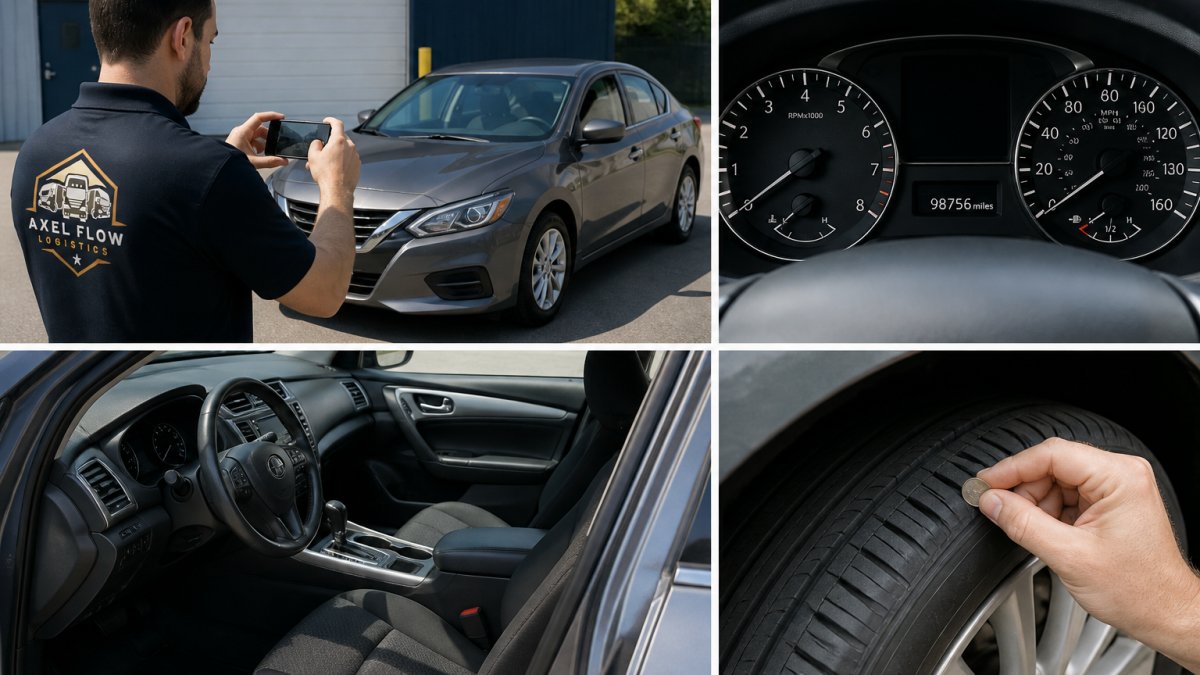
Remove personal belongings. The carrier is liable only for the vehicle itself, not items left inside.
Check fluid levels, tire pressure, battery, and lights. Carriers typically require at least a quarter tank of fuel for safe loading.
Document the vehicle's condition with photos or video. Take close-up shots of any existing damage, dents, scratches, or worn areas.
Inspection and Condition Reports
The carrier performs a vehicle inspection at pickup to document condition. Be present and review the condition report carefully.
The condition report lists existing damage, mileage, fuel level, and overall vehicle condition. Sign off only after confirming the report accurately reflects what you see. If the report misses damage you documented, point it out immediately and request corrections before the carrier departs.
At delivery, the carrier repeats the inspection process. Compare the delivery condition report to the pickup report. Any new damage that appeared during transport is the carrier's responsibility.
Common Mistakes to Avoid
Don't leave the vehicle in poor mechanical condition. If the vehicle doesn't start or has brake issues, inform the broker immediately.
Don't assume your insurance covers transport damage. Many policies exclude vehicles in transit. Confirm coverage before pickup, and purchase additional protection if needed.
Don't skip the condition report review. This document is your only proof of the vehicle's condition at pickup.
Don't ignore communication from the carrier. When the carrier calls to confirm pickup, be available and prepared. Missing the pickup window delays your shipment and may incur additional fees.
Insurance, Claims, and Scam Prevention
Damage during transport is rare, but it happens. Understanding your insurance coverage, the claims process, and how to identify scams protects you financially and legally.
Understanding Damage Protection and Coverage Limits
Your personal auto insurance may or may not cover your vehicle during transport. Check your policy or call your insurer to confirm.
Carrier liability insurance covers damage caused by the carrier's negligence. However, coverage limits vary.
When you file a damage claim, you'll need the condition reports, photos of damage, repair estimates, and documentation of the vehicle's value.
At Axel Flow Logistics, we ensure every carrier maintains adequate insurance and we verify coverage before assigning your shipment. If damage occurs, we manage the claims process on your behalf.
How to Spot Red Flags and Verify Carrier Credentials
Scams in auto transport are common. Fraudulent brokers take payment and disappear, leaving you without a carrier.
Verify USDOT and MC numbers on the FMCSA website before signing any contract.
Don't pay the full amount upfront.
Avoid brokers who pressure you to decide quickly or refuse to provide written quotes.
Get everything in writing.
When you receive quotes for shipping one car across state lines, compare at least three brokers.
Research the broker's reputation. Check reviews on the Better Business Bureau, Google, and industry sites.
At Axel Flow Logistics, we operate transparently. Our FMCSA registration, insurance, and carrier partnerships are verifiable.
Frequently Asked Questions
What documents do I need to ship a car across state lines?
You'll need your vehicle title, government-issued ID, proof of insurance, and the vehicle registration. Some carriers request a pre-shipping inspection report documenting the car's condition. If someone else is receiving the vehicle, provide their contact information and authorization. Keep copies of your booking confirmation and any signed contracts. Having these documents ready speeds up pickup and protects you if disputes arise during transit.
How much does it cost to ship a car across state lines?
Shipping costs depend on distance, vehicle size, transport type, current carrier availability, fuel prices, and route demand. A short-distance shipment costs significantly less than cross-country transport. Enclosed transport costs more than open transport. Rather than guessing, request a free quote from a trusted broker who can provide route-specific pricing. Pricing is transparent when you work with FMCSA-registered brokers.
How long does car shipping take across state lines?
Transit time typically ranges from 3-7 business days for most routes, though distance and weather affect this timeline. Carriers plan routes to move multiple vehicles efficiently, so your pickup and delivery windows are scheduled accordingly. Delays occasionally occur due to weather, mechanical issues, or carrier logistics, a reliable broker communicates proactively if this happens.
What's the difference between open and enclosed car transport?
Open transport carries your vehicle on an exposed multi-car carrier, offering affordable rates and faster availability. Enclosed transport places your vehicle inside a protective trailer, shielding it from weather, road debris, and dust, ideal for classic, luxury, or high-value vehicles. Open transport works well for standard daily-driver vehicles. Enclosed costs more but provides superior protection. Your choice depends on your vehicle's value, condition, and your budget. Brokers can advise which option suits your specific vehicle and route.
What happens if my carrier doesn't show up on the promised pickup date?
Delays happen, but a reputable broker communicates immediately and works to reschedule quickly. Your booking should specify a pickup window (typically 2-3 business days), not a single date, which accounts for carrier logistics. If a carrier cancels, the broker assigns an alternative from their vetted network. Request a written delay policy before booking so you know your options. Always confirm pickup details 24 hours before the window begins.
Can I ship my car with personal belongings inside?
No. Federal regulations prohibit shipping personal items inside vehicles during interstate transport. This protects you from liability if items are lost or damaged, and it reduces the carrier's insurance risk. Remove all personal belongings, valuables, and loose items before pickup. Empty the trunk, glove compartment, and under-seat storage. Some carriers allow essential items like a spare tire or jack, but confirm this with your broker beforehand. Violating this rule can void your insurance coverage if damage occurs.
How do I verify a carrier has real insurance and won't leave me liable?
Ask your broker for the carrier's FMCSA number and request proof of active insurance before you book. You can verify FMCSA registration at the Federal Motor Carrier Safety Administration website. Legitimate carriers carry minimum liability insurance of $750,000 for general freight. A trustworthy broker vets every carrier's insurance and safety record before assignment. Review your shipping contract for liability limits and damage coverage. Never book with a carrier unwilling to provide insurance documentation, this is a major red flag.
Why use a broker instead of contacting carriers directly?
Brokers maintain networks of vetted, FMCSA-compliant carriers and negotiate competitive rates you may not access alone. They handle carrier assignment, route optimization, real-time tracking, and problem resolution, saving you time and reducing the risk of scams. Brokers verify insurance and safety compliance on every shipment. They also provide bilingual support and proactive communication if delays occur. While carriers offer direct booking, brokers add a layer of transparency and accountability that protects individual shippers, especially those moving a single vehicle.
Shipping one car across state lines doesn't have to be stressful. The process becomes manageable when you understand the roles of brokers and carriers, verify credentials before booking, and prepare your vehicle properly. A trustworthy broker like Axel Flow Logistics handles the logistics, vets carriers for safety and insurance compliance, and manages claims if issues arise. Get a transparent quote today and experience the difference that professional coordination makes in your shipment.