 listicle
Benefits of Enclosed Vehicle Transport
Table of Contents
- What Enclosed Vehicle Transport Is and How It Works
- Maximum Protection From Weather and Environmental Exposure
- Shielding Your Vehicle From Road Debris, Dust, and Dirt
- Enclosed vs. Open Car Shipping: Why the Difference Matters
- Reduced Risk of Scratches, Dings, and Accidental Damage
- Security, Theft Prevention, and Peace of Mind
- Which Vehicles Benefit Most From Enclosed Transport
- Enclosed Car Shipping Cost and Pricing Factors
- Frequently Asked Questions
Last Updated: October 7, 2026
What Enclosed Vehicle Transport Is and How It Works
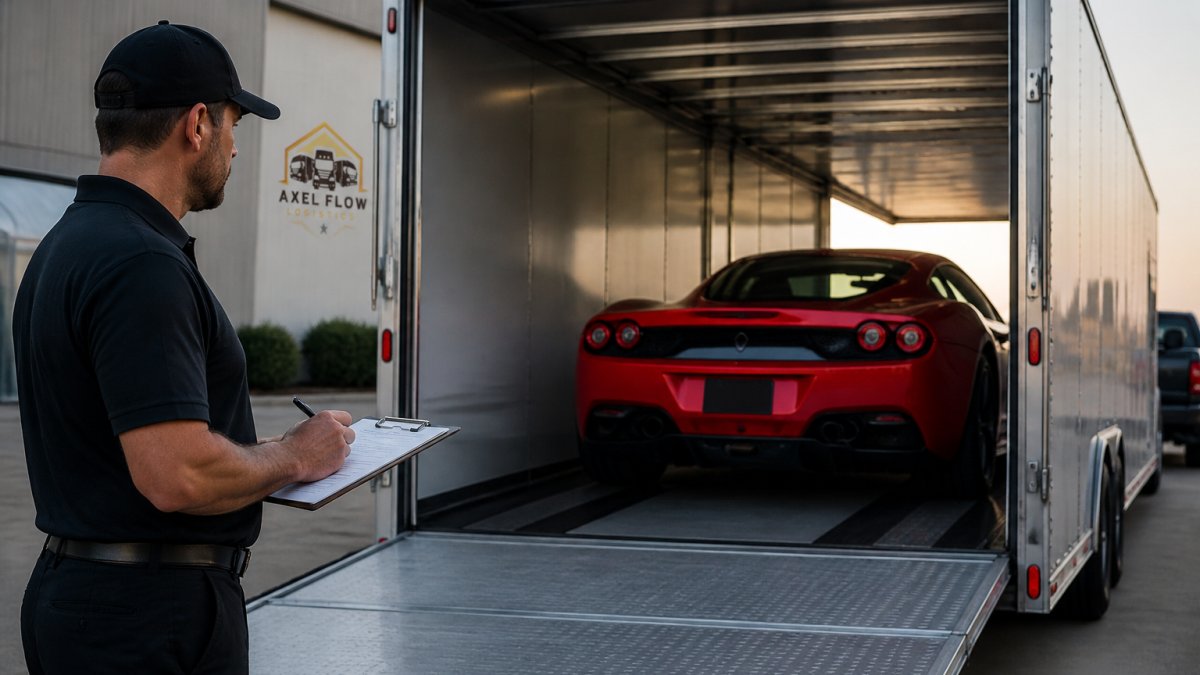
Enclosed vehicle transport ships your car inside a fully enclosed trailer rather than on an open carrier, shielding it from weather, road debris, and environmental hazards.
We offer Open Auto Transport for vehicles where cost efficiency is the priority, so you can choose the method that matches your vehicle and budget.
The key difference is containment: on an open carrier your vehicle sits exposed to rain, hail, dust, insects, and road debris, none of which reaches your car inside an enclosed trailer.
Maximum Protection From Weather and Environmental Exposure
Weather damage during transport is real and cumulative: rain seeps into trim gaps and causes rust, hail leaves dents, and sun fades clear coat.
The trailer acts as a sealed container: temperature fluctuations are minimal and humidity stays controlled, so your vehicle arrives in the same condition it left.
This matters most for vehicles that sit unused after arrival. A classic car heading to winter storage, a luxury vehicle bound for a seasonal home, or a newly purchased collector's car all benefit from arriving pristine.
Shielding Your Vehicle From Road Debris, Dust, and Dirt
Open carriers expose your vehicle to a constant barrage: road dust on the paint, gravel chips from other vehicles, road salt bonding to the undercarriage, and tar sticking to wheels and lower panels.
Enclosed vehicle transport eliminates this exposure: no dust settles on the paint, no gravel strikes the hood or windshield, and no road salt coats the undercarriage.
The benefit is simple: your vehicle arrives cleaner and safer, with no extensive detailing needed, and the paint and protective coatings remain intact for resale value.
Enclosed vs. Open Car Shipping: Why the Difference Matters
The choice comes down to risk tolerance and vehicle value.
Enclosed vehicle transport makes sense when arrival condition matters. Luxury cars, exotic vehicles, classic cars, and high-value inventory all benefit from the sealed environment, and the premium reflects the reduced risk of arriving as it departed.
The real difference isn't cleanliness, it's control: enclosed transport governs the environment your vehicle experiences, while open transport leaves that to chance.
Reduced Risk of Scratches, Dings, and Accidental Damage
On an open carrier, your vehicle sits next to other cars, and wind or carrier sway during turns can shift vehicles into contact.
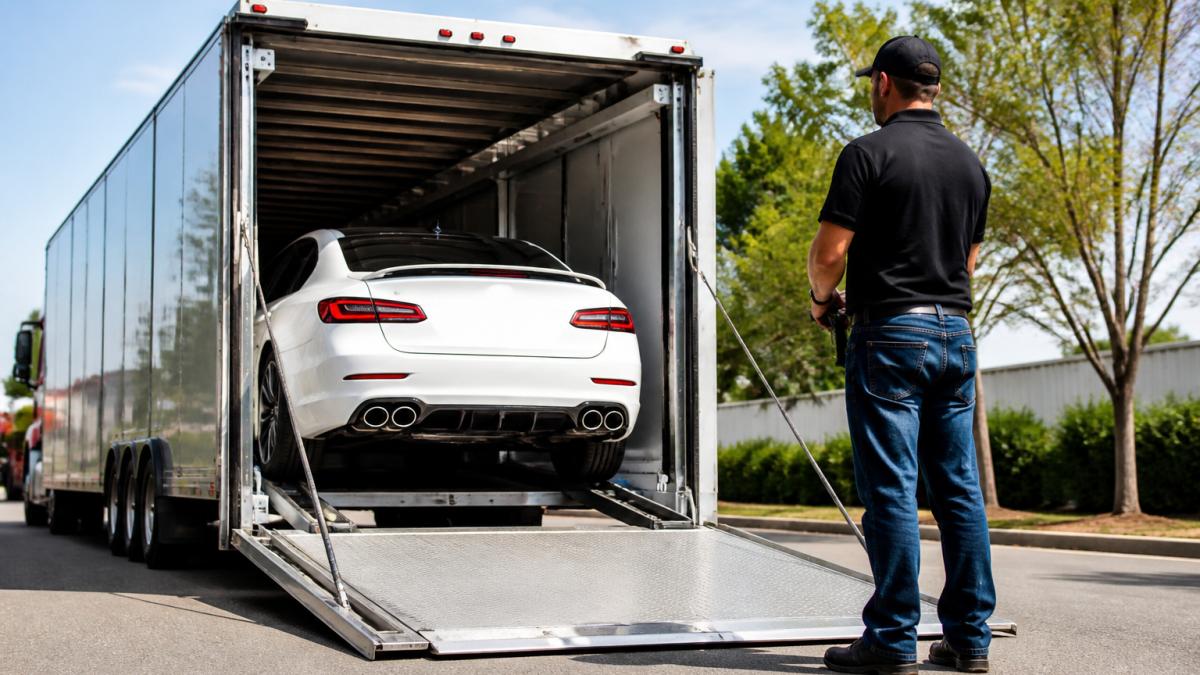
During loading and unloading, enclosed trailers use hydraulic lifts and wider working space, reducing accidental contact with the trailer frame or dock equipment.
The financial impact is meaningful: a single ding or scratch can cost $500 to $2,000 to repair.
Security, Theft Prevention, and Peace of Mind
Your vehicle is valuable, and thieves know it.
This matters more than many people realize. Catalytic converters, high-end wheels, and luxury badges are all stolen from vehicles in transit.
Get a Quote →
Beyond theft prevention, enclosed transport offers peace of mind: your vehicle is secured in a sealed environment, invisible to every passing vehicle and every stop along the route, real value when transporting something irreplaceable.
Which Vehicles Benefit Most From Enclosed Transport
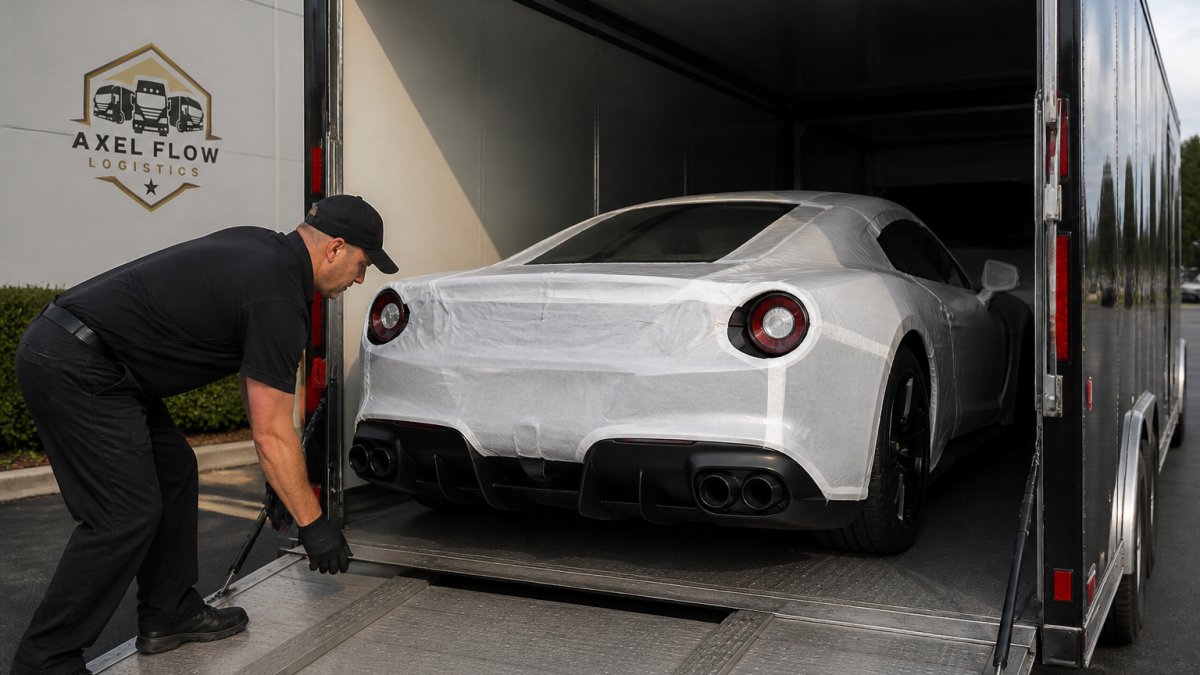
Most articles sort vehicles into two piles: expensive cars that need enclosed transport and ordinary cars that do not. A better framework weighs three things: what the vehicle is worth, how sensitive its condition is to transit exposure, and how hard it is to load and unload without damage. Those factors, not the badge, tell you whether the enclosed premium earns its keep.
The three-factor test
Value. If a scratch, chip, or dent would cost more to fix than the enclosed premium, enclosed transport is the rational choice.
Condition sensitivity. Some vehicles lose value from exposure even without physical damage: a car with original paint, a numbers-matching restoration, or one delivered to a buyer expecting showroom condition. A work truck or high-mileage commuter does not.
Loading difficulty. This is where low-clearance and modified vehicles get into trouble.
Matching the vehicle to the equipment
Enclosed transport is not one product. The trailer and loading method matter as much as the enclosure itself.
- Soft-sided enclosed trailers use a fabric or canvas skin over a frame. They block weather, dust, and most road debris, are the most affordable enclosed option, and suit classic cars, restored vehicles, and premium daily drivers.
- Hard-sided enclosed trailers use rigid aluminum or composite panels, offering the strongest protection against impact, debris, and prying eyes. They are the standard for exotics, concours-level cars, and high-value inventory, and cost more because the equipment is heavier and holds fewer vehicles.
- Liftgate and hydraulic loading raises the vehicle to deck height so it never climbs a steep ramp. Ask about it for low-clearance sports cars, fragile front splitters, and anything with a wide track or long overhang.
- Winch loading is used for non-running vehicles. It is safe with proper straps and soft ties but adds time and labor, so confirm the carrier has the right equipment before booking.
If your vehicle is low, wide, or modified, ask the carrier directly how it will be loaded and whether the trailer can accommodate your clearance. A carrier that cannot answer specifically is not the right carrier for that vehicle.
Where each type lands
| Vehicle Type | Enclosed Worth It? | Why |
|---|---|---|
| Exotic, limited-production, or concours car | Yes, hard-sided | Irreplaceable; condition drives value; often needs liftgate loading |
| Classic, vintage, or restored car | Yes, soft- or hard-sided | Original paint and trim are fragile; exposure risk is high |
| Luxury sedan, sports car, or premium SUV | Usually yes | Repair costs and resale sensitivity justify the premium |
| Modified or low-clearance car | Often required | Standard open ramps may not clear the vehicle at all |
| Dealer or auction inventory | Yes for high-value units | Each unit is revenue; damage is a direct loss |
| New vehicle delivery, premium model | Yes | Buyer expects showroom condition |
| Daily driver, used truck, commuter | Usually no | Open transport is cheaper and the vehicle tolerates exposure |
The decision in one sentence
If the cost of a bad outcome exceeds the enclosed premium, ship enclosed. If the vehicle is hard to load, ship enclosed regardless of value, because the equipment is the only safe option. If neither is true, open transport is the economical choice.
Enclosed Car Shipping Cost and Pricing Factors
Enclosed transport costs more than open shipping, and the honest reason is capacity math. An open carrier fits roughly eight to ten vehicles on a single deck, while a typical enclosed trailer holds three to five and a hard-sided trailer built for exotics may hold only two or three. The carrier spreads the same fuel, wages, tolls, and deadhead miles across far fewer paying vehicles, so each carries a larger share of the trip cost.
What actually moves your quote
- Distance and route. Longer runs cost more, but the per-mile rate usually drops on long hauls because fixed costs spread further. A 300-mile enclosed move often prices higher per mile than a 2,000-mile move.
- Vehicle size and weight. A lifted truck or full-size SUV consumes more deck space and adds weight, affecting trailer capacity and fuel burn. Low-clearance sports cars can cost more too, because they need ramps, extended loading time, or a liftgate.
- Operability. A car that does not start, roll, or steer must be winched on and off, adding labor and risk that carriers price accordingly.
- Season and corridor. Demand spikes when snowbirds relocate and when auction and show seasons peak. Remote pickup or delivery points add cost because the driver may run empty to reach you.
- Pickup flexibility. A firm date and narrow window costs more than a flexible window that lets the carrier consolidate loads. Flexible scheduling is one of the few levers you control.
A transparent example of how the math works
Say you are moving a low-clearance sports car 1,200 miles on a popular corridor, and the carrier has three open slots in a five-car enclosed trailer. Your quote reflects the space the car occupies, the labor to load it, the fuel, and the driver's time. Make the pickup window flexible by a week and the carrier can pair your car with a load already heading that direction, cutting deadhead miles and dropping the quote.
How to compare quotes without getting burned
A headline number tells you almost nothing. Compare quotes on the same terms:
- Is the quote all-in or does it exclude fuel surcharges, tolls, or a broker fee?
- What insurance limit is attached, and is it carrier liability or a separate cargo policy?
- Is the pickup window a range or a hard date, and what happens if the carrier is late?
- Is the trailer soft-sided or hard-sided, and does the equipment match your vehicle's clearance?
- Is there real-time tracking, and who is your point of contact if something goes wrong?
A lower quote that omits insurance, hides a fuel surcharge, or promises a hard date the carrier cannot meet is not cheaper.
When the premium is worth it
The value calculation is not about shipping cost alone but shipping cost versus the cost of a bad outcome. A single repaint on a collector car can run into five figures, and a repaired panel can reduce resale value even when the work is flawless. For a vehicle where condition drives value, the enclosed premium is a fraction of the downside; for a daily driver where a wash and touch-up pen solve the problem, open transport usually wins on pure economics.
| Factor | How It Moves the Price | What You Can Control |
|---|---|---|
| Distance and route | Longer runs cost more; per-mile rate often drops on long hauls | Little, but you can compare corridors |
| Vehicle size and weight | More deck space and weight raise the cost | Nothing, but disclose accurately |
| Operability | Non-running vehicles need winching and add labor | Get it running if possible |
| Season and corridor | Peak demand and remote routes cost more | Ship in shoulder season if you can |
| Pickup flexibility | Flexible windows let carriers consolidate and cut cost | Offer a wider window |
| Insurance limit | Higher declared value raises the premium | Declare the true value, not a lowball |
Frequently Asked Questions
What are the main benefits of enclosed vehicle transport?
Enclosed vehicle transport protects your car from weather, road debris, dust, hail, and sun exposure during transit. It also reduces the risk of scratches, dings, and accidental damage from road conditions. Additionally, it provides enhanced security and theft prevention compared to open transport. These benefits make enclosed transport ideal for luxury, exotic, classic, and high-value vehicles that require maximum protection during shipment.
Is enclosed car shipping worth the extra cost?
Whether enclosed transport is worth the cost depends on your vehicle's value and condition. For luxury, exotic, classic, or collectible vehicles, the premium is justified because the cost of even minor damage during transit often exceeds the transport price difference. For standard vehicles, open transport may be sufficient. Evaluate your vehicle's replacement cost, current condition, and how critical pristine arrival is to your decision.
How long does car shipping take with enclosed transport?
Enclosed vehicle transport timelines depend on distance, route availability, pickup windows, and carrier scheduling. Cross-country shipments typically take 5-10 business days, while regional moves may take 2-5 days. Enclosed trailers sometimes have longer wait times because they carry fewer vehicles and require more careful loading. For exact transit timelines and pickup windows specific to your route, contact a broker.
What insurance and damage coverage applies to enclosed car shipping?
Most reputable carriers carry liability insurance that covers damage during transport, though coverage limits vary. It's critical to verify that your carrier has genuine insurance and understand what damage is covered under their policy. Document your vehicle's condition before pickup with photos and a written inspection. Review the transport contract's liability terms and consider whether additional coverage is needed for high-value vehicles. Ask your broker to confirm the carrier's FMCSA compliance and insurance standards before your shipment.