 blog
blog
State to State Car Shipping: 2026 Guide
Table of Contents
- How State to State Car Shipping Works
- Getting Accurate Car Shipping Quotes
- State-to-State Car Shipping Cost: What Drives the Price
- Car Shipping Transit Time: What to Expect
- Questions to Ask a Car Shipping Company
- Preparing Your Vehicle for Interstate Transport
- Conclusion: Booking Your State to State Car Shipping
- Frequently Asked Questions
Last Updated: October 4, 2026
How State to State Car Shipping Works
If you're moving across the country and need to get state to state car shipping sorted, here's the short answer: you hire a broker or a carrier, they pick up your vehicle at an agreed location, and a car carrier delivers it to your new address within a set delivery window.
State to state car shipping is the arrangement of transporting a vehicle between two states using a licensed carrier, usually on a multi-car open trailer, under a bill of lading that defines pickup, delivery, and liability terms. The FMCSA's consumer guidance on household goods and vehicle moves outlines what a legitimate carrier or broker must provide before your vehicle leaves the driveway.
Brokers vs. Direct Carriers
A transport broker arranges the shipment and assigns a carrier; a direct carrier owns the truck and hauls the vehicle itself. Brokers typically have access to a wider carrier network, which matters when your route demand is thin or your pickup date is tight.
What most guides miss is that the broker you choose is the one who vets the carrier. Ask how they check safety ratings and insurance before dispatch. We run compliance checks on every shipment for exactly this reason.
Open vs. Enclosed Transport
Open transport is the standard, lower-cost option and moves the vast majority of vehicles. Enclosed transport costs more and protects against road debris, weather, and dust.
- Choose open transport for daily drivers, family cars, and most SUVs
- Choose enclosed transport for classics, luxury vehicles, and anything with custom paint or low ground clearance
- If the vehicle is inoperable, tell the broker upfront; it changes loading equipment and pricing
What Happens From Booking to Delivery
Most guides stop at "book it and wait." Here is the actual sequence, step by step.
- Quote and booking. You confirm the pickup and delivery ZIP codes, vehicle details, transport type, and a pickup window. You sign an agreement and typically pay a deposit to reserve the load. Read the cancellation terms before you sign; deposit refund policies vary widely.
- Dispatch. The broker posts your load to its carrier network. A carrier accepts it, and you receive the carrier's name, MC or DOT number, and the driver's contact information, so you can verify the carrier's authority and insurance yourself.
- Carrier contact and pickup scheduling. The driver calls to set a specific pickup day and time, usually within a day or two of accepting the load. Pickup windows are ranges because trucks move other vehicles on the same route.
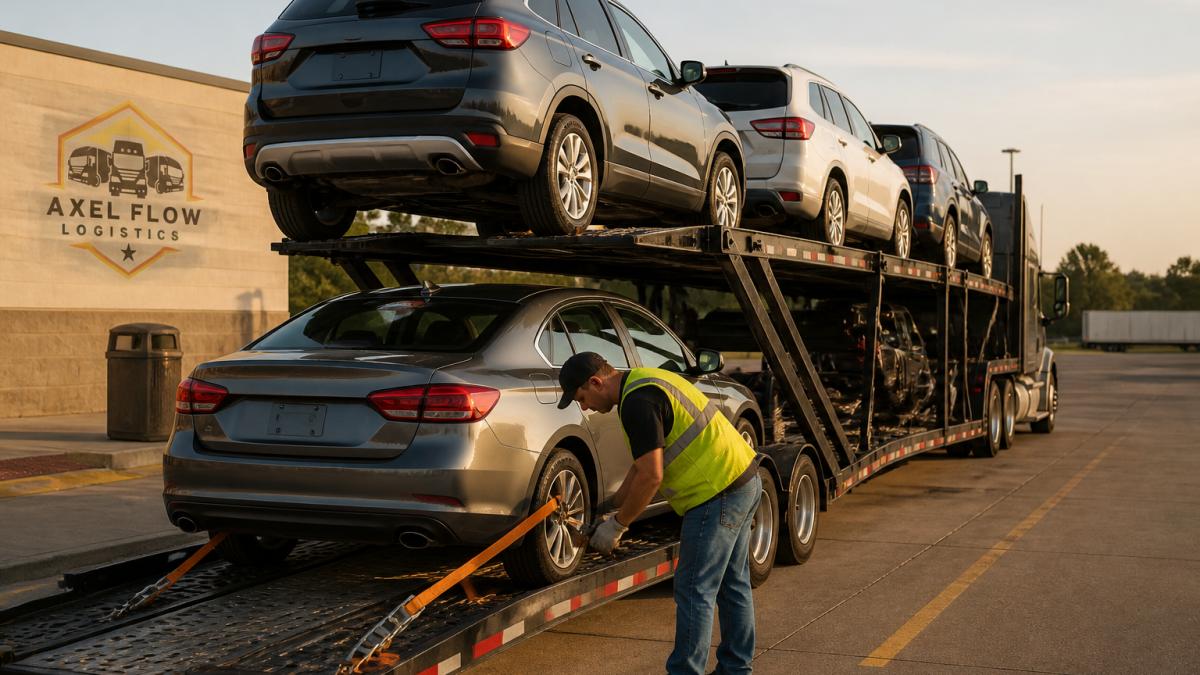
- Pickup inspection. Before loading, you and the driver walk the vehicle together. The driver records existing damage, mileage, and condition on the bill of lading. Take your own timestamped photos, and do not sign a clean bill of lading if you see damage the driver has not noted.
- Transit. The vehicle rides on a multi-car trailer, often with several stops as other cars are dropped. Transit time starts at pickup, not at booking. The driver typically gives a one-day-ahead delivery estimate.
- Delivery inspection. At the destination, walk the vehicle again against the bill of lading before the driver leaves. Note any new damage on the delivery copy and get the driver's signature. Once the truck pulls away, proving when damage occurred becomes much harder.
- Final payment. The balance is usually paid to the carrier at delivery by cashier's check, money order, or a method specified in your agreement. Confirm the accepted payment method before pickup so you are not scrambling at the curb.
Insurance, Damage Claims, and the Bill of Lading
The carrier's insurance covers the vehicle in transit, but coverage is not unlimited or automatic. The bill of lading is the contract that ties your shipment to that coverage.
- Carrier liability is generally tied to the carrier's cargo insurance, and many policies carry a deductible or limit the carrier, not the shipper, absorbs. Ask for the carrier's certificate of insurance before dispatch.
- Pre-existing damage is excluded. This is why the pickup inspection and your own photos matter. If damage is not noted before loading, the carrier can argue it was already there.
- Personal items left in the vehicle are typically not covered by the carrier's insurance, and some carriers prohibit them entirely. Check the agreement before you pack the trunk.
- Claims process. Report damage to the carrier and broker in writing as soon as you find it, keep the bill of lading, and submit photos. Most carriers have a claims window measured in days, not weeks, so do not wait until you have unpacked.
A common pattern is a denied claim because damage was not documented at delivery. The fix is simple: inspect before you sign, and photograph everything.
Getting Accurate Car Shipping Quotes
An accurate car shipping quote depends on five inputs, and a quote missing any of them is a guess. Give the broker your exact pickup location and delivery location (ZIP codes, not city names), the vehicle's year, make, model, and whether it runs, your pickup date window, and whether you want open or enclosed transport.
Instant quote tools are useful for ballparking, but treat them as estimates. A free quote built on incomplete information often changes once the carrier sees the vehicle.
State-to-State Car Shipping Cost: What Drives the Price
State-to-state car shipping cost comes down to distance, route popularity, vehicle size, transport type, and timing. There's no single national rate, which is why two quotes for the same route can differ.
The factors that move your price estimate most:
| Cost Factor | What It Does to Price | Why |
|---|---|---|
| Shipping distance | Higher with more miles | Fuel, driver hours, tolls |
| Route demand | Higher on popular lanes | Carrier availability tightens |
| Vehicle size | Higher for large SUVs and trucks | Takes more deck space |
| Open vs. enclosed | Enclosed costs more | Specialized equipment |
| Seasonal demand | Higher in peak months | Fewer trucks per load |
| Operable vs. inoperable | Inoperable costs more | Needs a winch or forklift |
Cost per vehicle on a shared open trailer is almost always lower than a dedicated enclosed run. That's the trade-off: shared space, shared schedule.
How the Factors Interact
Cost factors do not act alone. A short route with low demand can cost more per mile than a long, busy corridor, because the carrier still has to fill a truck and may deadhead to reach you.
Distance is the anchor, but route demand is the multiplier. Carriers price lanes, not miles. A lane with steady outbound volume from a major metro usually has more trucks competing for loads, which keeps rates softer.
Sample Route Price Ranges
Exact pricing depends on your dates and vehicle, but these ranges reflect common patterns for operable vehicles on open transport. Treat them as planning estimates, not quotes.
These are ranges, not promises. A quote that lands far below the range for your lane is a signal to ask questions, not a bargain.
Seasonal Demand and Route Popularity
Seasonal demand swings pricing more than most people expect. Late spring and late summer, when relocations and college moves cluster, push rates up on the busiest state-to-state routes.
Snowbird routes add a second pattern: demand rises on north-to-south lanes in the fall and reverses in the spring. If your move aligns with either direction, booking several weeks ahead gives you more carrier options and less price pressure.
Ways to Lower Your Cost Without Cutting Corners
- Be flexible on pickup dates. A window of several days lets the carrier combine loads, which often lowers the rate.
- Choose a convenient pickup location. A large parking lot near a highway is easier for a multi-car trailer than a residential street with low branches.
- Skip enclosed transport if the vehicle does not need it. Enclosed is worth it for classics and exotics, but an unnecessary premium for a daily driver.
- Declutter the vehicle. Extra weight and personal items can affect pricing and are usually not covered by insurance.
For current rates on your specific route, check Axel Flow Logistics pricing rather than relying on a national average.
Car Shipping Transit Time: What to Expect
Car shipping transit time depends on distance and how quickly a carrier is dispatched on your route. Short regional moves often complete in a few days; coast-to-coast shipments take longer, and the delivery window is a range, not a single day.
- Carrier dispatch happens once a truck is assigned to your load
- Transit time starts at pickup, not at booking
- Delivery time is confirmed by the driver, usually a day ahead
Questions to Ask a Car Shipping Company
Before you book, ask these questions.
- Are you a broker or a carrier, and what's your FMCSA registration number?
- How do you vet carriers for insurance and safety compliance?
- Is the quoted price locked, or can it change at pickup?
- What's the pickup and delivery window, and what happens if the carrier is late?
- How will I get updates during transit?
- What does your insurance cover, and what's the claims process for damage?
The U.S. Department of Transportation's auto transport consumer checklist is a useful cross-check for what a compliant provider should disclose.
Preparing Your Vehicle for Interstate Transport
Preparation protects your vehicle and speeds up the handoff. Do these before the carrier arrives:
- Wash the vehicle so existing damage is easy to document
- Photograph all four sides, the roof, and the odometer
- Remove personal items, toll transponders, and loose accessories
- Leave about a quarter tank of fuel to reduce weight
- Disable any alarm or verify the driver has the code
A vehicle inspection at both pickup and delivery is your protection. Note every scratch on the bill of lading before you sign, and do the same at delivery before the driver leaves.
Conclusion: Booking Your State to State Car Shipping
Coordinating a cross-country move is stressful enough without wondering whether your car will arrive on time and undamaged. Axel Flow Logistics handles that uncertainty as an FMCSA-registered broker, with rigorous carrier vetting based on safety and insurance standards, proactive compliance checks on every shipment, and bilingual support that keeps drivers and customers on the same page. Whether your move calls for Open Auto Transport on a shared trailer or enclosed transport for a vehicle that needs extra protection, the process works the same way: book it, verify the carrier, and document the vehicle at both ends.
Frequently Asked Questions
How much does it cost to ship a car from one state to another?
The cost for state-to-state car shipping depends on distance, vehicle size, transport type (open or enclosed), and seasonal demand. For a precise price estimate, request a free quote from a licensed broker like Axel Flow Logistics, who can provide a tailored rate based on your pickup and delivery locations.
How long does state-to-state car shipping take?
Car shipping transit time depends on factors like carrier availability, route demand, and weather, which can affect the delivery window. For a more precise estimate, contact Axel Flow Logistics.
What should I ask a car shipping company before booking?
Ask about their FMCSA registration, insurance coverage, and whether they use a carrier network or own trucks. Confirm if the quote is binding or subject to change, and clarify the pickup and delivery windows. Also ask about their damage claim process and whether they provide real-time updates. A transparent broker will answer these questions upfront and provide their MC number for verification.
How can I avoid hidden fees when booking auto transport?
Request a written quote that itemizes all charges, including any fees for inoperable vehicles or enclosed transport. Avoid brokers who demand large upfront deposits before assigning a carrier. Always read the terms of service and confirm what happens if the carrier is delayed or the pickup date changes.