 How-to
Why Use an Auto Transport Broker for Your Vehicle Shipment
Last Updated: November 17, 2026
Quick Summary
An auto transport broker is a company that arranges your vehicle shipment without owning any trucks. It acts as the middleman, matching your vehicle with a vetted carrier that has the right equipment and insurance, and handles pricing, scheduling, and updates through one point of contact.
- Verify any broker's active authority, bond, and insurance on the FMCSA public portal before paying a deposit.
- Get the total price, deposit terms, and price-change policy in writing before booking.
- Ask for the assigned carrier's MC number and certificate of insurance before pickup.
- A broker's fee is built into the price, so brokered quotes usually run higher than carrier base rates.
- Choose a carrier directly if you have a fixed route and time to vet it yourself.
Table of Contents
- What an Auto Transport Broker Actually Does
- Auto Transport Broker vs Carrier: Which Fits Your Shipment
- Pros and Cons of Using a Broker
- Are Car Shipping Brokers Legit? How to Verify One Before Booking
- How Auto Transport Brokers Make Money and Why Quotes Differ
- Avoiding Bait-and-Switch Auto Shipping Quotes
- Choosing Your Next Step for a Safe, On-Time Vehicle Shipment
- Frequently Asked Questions
What an Auto Transport Broker Actually Does
An auto transport broker is the company that handles your vehicle shipment from quote to delivery without owning a single truck. A broker works this way: it acts as the middleman between you and vetted carriers, finding a driver with the right equipment and insurance for your route. You pay one provider, and the broker manages the carrier relationship. For a relocation or a single vehicle that needs to get across the country, our Nationwide Auto Transport options are one way to arrange the shipment.
A broker's value is coordination. Brokers typically price the route, match the vehicle to a carrier, confirm the pickup window, and stay in contact until delivery.
Auto Transport Broker vs Carrier: Which Fits Your Shipment
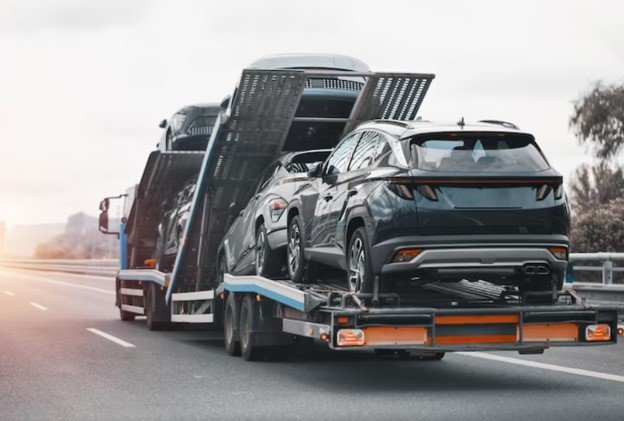
A carrier is the company that owns the truck and physically moves your vehicle. A broker does not drive anything. Instead, the broker sells you the shipment and then buys the transport from a carrier.
Calling a carrier directly can work if you have the time to compare insurance certificates, confirm operating authority, and handle scheduling yourself. For a current, deeper guide on spotting bait-and-switch tactics, see how to avoid bait-and-switch car shipping quotes. A broker can make sense when you want one contact and help with scheduling.
The short version: choose a carrier directly if you have a fixed route and time to vet it. Choose a broker when speed, flexibility, or a single point of contact matters more.
Pros and Cons of Using a Broker
Pros
- Access to a network of carriers
- One point of contact for pricing, scheduling, and updates
- Faster rebooking if a carrier cancels
- Carrier vetting handled for you
Cons
- The broker's fee is built into the price, so you pay more than the carrier's base rate
- Service quality depends on the broker you choose
- You are relying on a middleman for communication with the driver
Weigh these against your timeline. A broker usually costs more than booking a carrier directly, but it can save you days of searching if your pickup date is firm.
A broker can be worth it, but the tradeoffs are worth weighing against your timeline.
| Factor | Broker | Carrier directly |
|---|---|---|
| Contact | One point of contact | You manage each carrier |
| Cost | Broker fee built into price | Carrier's base rate |
| Rebooking if cancelled | Faster | Slower |
| Carrier vetting | Handled for you | Your responsibility |
Are Car Shipping Brokers Legit? How to Verify One Before Booking
Legitimate brokers are registered with the Federal Motor Carrier Safety Administration (FMCSA) and hold active broker authority. Verification is not a vibe check, it is a short, repeatable sequence you can finish in about fifteen minutes before you pay a deposit. Work through it in this order.
1. Confirm active broker authority. Go to the FMCSA's public licensing and insurance portal and search the broker's USDOT and MC numbers. You want to see "active" broker authority, not just a USDOT number, which any motor carrier or even an exempt operation can hold. To learn how to steer clear of high-risk auto carriers behind a broker's booking, review the carrier checks in this guide.
2. Check the insurance on file. The same FMCSA record shows the broker's surety bond or trust fund. Federal rules require brokers to maintain a surety bond or trust fund to protect shippers; check the FMCSA regulations for the current required amount. If the bond shows as inactive, expired, or below the required amount, stop.
3. Cross-check the business identity. The legal name on the FMCSA record, the name on the contract, and the name on the payment instructions should match. Mismatches, a different LLC taking the deposit, a personal Zelle or Cash App request, or a "dispatch" name that does not appear on the authority record, are among the most common fraud patterns in this industry.
4. Read the contract before signing. Confirm in writing: the total price and what it includes, the deposit amount and refundability, whether the price is guaranteed or an estimate subject to carrier acceptance, the pickup and delivery windows, and the broker's cancellation policy. If the contract is silent on price changes, assume the price can change.
5. Check complaint history and reviews across sources. Look at the FMCSA record for complaints, the Better Business Bureau for complaint patterns and resolution, and at least two independent review platforms. Read the one- and two-star reviews specifically, they reveal how the broker handles delays, damage, and refunds far better than five-star summaries.
6. Ask the operational questions. Who is my single point of contact? How and how often will I get updates? What happens if the assigned carrier cancels after pickup is scheduled? Will you send me the carrier's name, MC number, and certificate of insurance before pickup? A broker that answers these crisply and in writing is behaving like a professional operation.
7. Verify the carrier, not just the broker. Before your vehicle is loaded, ask for the assigned carrier's MC number and certificate of insurance showing active auto liability and cargo coverage. Confirm the carrier's authority is active on FMCSA as well. The broker vets carriers, but you are entitled to see the proof.
Watch out: A broker that pressures you to pay a deposit before you have seen its authority record, bond status, and written contract terms is the single biggest red flag, legitimate brokers expect you to check and make the information easy to find.
Axel Flow Logistics is FMCSA-registered and licensed.
How Auto Transport Brokers Make Money and Why Quotes Differ
A broker earns the spread between the price you pay and the price it pays the carrier. That spread, the broker fee, covers dispatch, carrier vetting, insurance coordination, and customer support. It is the main reason two quotes for the same route can differ by hundreds of dollars even when both brokers use the same pool of carriers.
What a quote typically includes and excludes. A complete quote should state the total price, the broker fee portion, the carrier pay portion, and whether the price is guaranteed or an estimate. Common exclusions to ask about: fuel surcharges, tolls on certain routes, oversize or inoperable vehicle fees, enclosed-transport premiums, and gate or storage fees at either end. A quote that does not separate broker fee from carrier pay makes it impossible to tell whether a low number is a real price or a placeholder.
How deposits and balances usually work. Brokers often collect a deposit at booking, with the balance paid at delivery; confirm the specific terms in writing. Confirm three things in writing: the deposit amount, whether it is refundable and under what conditions, and exactly when and to whom the balance is due. A deposit that is non-refundable even when the broker fails to secure a carrier is a term worth walking away from.
Why the same route produces different prices. Quotes move with vehicle size and condition (a full-size SUV or a non-running vehicle takes more deck space and equipment), pickup and delivery accessibility (a residential street with low branches is harder than a commercial lot), timing (peak seasonal demand tightens carrier capacity), and delivery type (open vs. enclosed). A quote that looks low may reflect a carrier with limited capacity, a longer expected wait, or a price the broker hopes a carrier will eventually accept.
What a quote does and does not guarantee. A guaranteed quote locks the price you pay the broker. An estimate means the final carrier price can rise if no carrier accepts the original number, and that increase is the mechanism behind most bait-and-switch complaints. Ask directly: "Is this the total I will pay, or can it change after booking?" Get the answer in the contract, not just on the phone.
The bait-and-switch pattern to recognize. A quote far below the market rate for your route, followed by a request for a deposit, followed by a price increase at pickup because "no carrier would take it at that rate." The defense is procedural: written total price, written change policy, written deposit terms, and a broker whose FMCSA record and reviews show a clean complaint history.
At Axel Flow Logistics, we explain the full cost breakdown before you commit. Pricing depends on vehicle size, route, timing, and delivery type, so check our pricing page or request a quote for current figures.
Avoiding Bait-and-Switch Auto Shipping Quotes
Bait-and-switch happens when a low initial quote rises after the vehicle is booked, often at pickup. Common triggers include a quote that excludes fuel surcharges, an unrealistic price that no carrier will accept, and an unclear deposit policy.
To avoid this, get the total price in writing, ask what is included and what could change it, and confirm the deposit amount and when the balance is due. Be cautious of any quote far below the market rate for your route.
At Axel Flow Logistics, we explain the full cost breakdown before you commit. Pricing depends on vehicle size, route, timing, and delivery type, so check our pricing page or request a quote for current figures.
Choosing Your Next Step for a Safe, On-Time Vehicle Shipment
Start by checking any broker's FMCSA registration and insurance certificate, then compare written quotes that show exactly what is included. Ask how the broker handles a cancelled carrier and what updates you can expect during transit. If your SUV or pickup truck needs to move, our SUV & Pickup Truck Transport service is available for those vehicles.
If you are ready to move forward, book a reliable auto transport broker in Florida that will confirm your carrier and pickup window in writing, or explore how our Sarasota logistics company supports auto transport and brokerage for your next shipment.
Frequently Asked Questions
Is it worth it to use an auto broker?
For most people shipping one vehicle or a few cars a year, a broker is worth considering because it handles carrier matching, scheduling, and paperwork in one place. Brokers typically work with a network of carriers, which can make it easier to find capacity than calling carriers one by one. The tradeoff is the broker's fee, which is built into the price. Compare the total quoted price, what it includes, and the carrier's insurance coverage before deciding whether the convenience justifies the cost.
Are car shipping brokers legit?
Legitimate auto transport brokers are licensed by the Federal Motor Carrier Safety Administration (FMCSA) and hold a broker authority with a valid USDOT number. You can look up any broker's license and insurance status in the FMCSA's public database before booking. Also confirm the broker carries a surety bond or trust fund as required, and ask for written terms covering pickup windows, price, and what happens if a carrier cancels. A broker that avoids giving its MC or USDOT number is a warning sign.
What is the difference between an auto transport broker and a carrier?
A carrier is the company that owns and operates the truck that physically moves your vehicle. A broker does not drive or own trucks; it arranges the shipment by matching your vehicle with a vetted carrier and managing communication, scheduling, and billing. Brokers can often find capacity faster across many routes, while booking a carrier directly can mean a lower total price if you find one with an open truck on your route. Each option suits different timing and budget needs.
How can I avoid a bait-and-switch auto shipping quote?
Ask for an all-in written quote that states the total price, the broker fee, the pickup and delivery locations, and the carrier type (open or enclosed). Be cautious of a very low initial quote, since some companies lower the price to win the booking and then raise it once a carrier is hard to find. Confirm whether the price is guaranteed or an estimate, and get the cancellation and deposit terms in writing before you pay anything.